


In daily life, the washing machine is one of the essential home appliances for every family. However, sometimes the washing machine suddenly stops turning, which is confusing and annoying. In order to help everyone solve this problem, today we will discuss in detail several common causes of washing machine failure, so that everyone can quickly find a solution when they encounter problems.
1. Power supply problem
Poor power supply contact
If the washing machine does not turn, the first thing to check is the power supply. If the power plug is not plugged in tightly or the socket has poor contact, the washing machine will naturally not work. Try to plug the plug again, or try another socket.
Damaged power cord
Sometimes, a damaged power cord can also cause the washing machine to fail to start. Check the power cord for signs of damage or wear. If the power cord is found to be damaged, a new power cord needs to be replaced.
Burned fuse
If there is no problem with the power cord and the socket, you can check the fuse inside the washing machine. Some washing machines have a fuse protection device in the circuit. If the fuse burns out, the washing machine will not turn. After replacing the fuse, the washing machine may resume normal operation.
2. Control panel failure
Control panel button failure
The control panel is the "brain" of the washing machine, responsible for directing the work of each component. If the control panel buttons fail or are damaged, the washing machine will naturally not work properly. Try pressing each button to see if there is a response. If the button fails, the control panel may need to be replaced.
Control circuit board failure
The control circuit board is one of the core components of the washing machine. If the circuit board fails, the washing machine will not rotate. At this time, it is best to contact a professional maintenance personnel for inspection and repair.
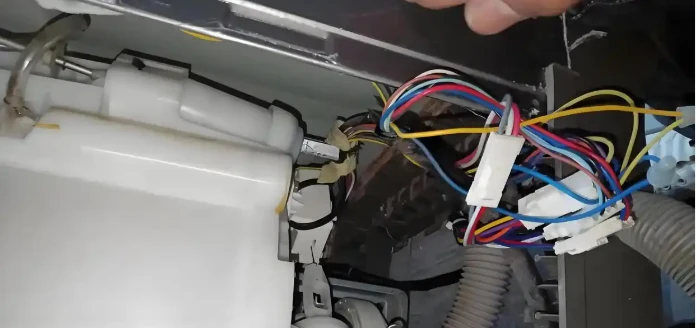
3. Transmission system problem
Belt breakage
The rotation of the washing machine relies on the transmission belt connecting the motor and the drum. If the belt is broken or severely worn, the washing machine will not rotate normally. Open the back cover of the washing machine and check whether the belt is intact. If the belt is found to be broken or worn, a new belt needs to be replaced.
Motor failure
The motor is the power source of the washing machine. If the motor fails, the washing machine will not rotate. Motor failure may be caused by brush wear, motor bearing damage, etc. Check whether the motor has abnormal noise or heat. If so, the motor or brush may need to be replaced.
Clutch failure
The clutch is an important component in the transmission system of the washing machine, responsible for switching between washing and dehydration modes. If the clutch fails, the washing machine may not rotate. Check whether the clutch is working properly and replace it if necessary.
4. Damage to internal components
Bearing damage
The bearing is one of the key components inside the washing machine. If the bearing is damaged, the washing machine will make abnormal noises and may not rotate. Check whether the bearing is worn or loose, and replace it if necessary.
Wear of transmission gear
The transmission gear is an important component connecting the motor and the drum. If the gear is severely worn, the washing machine will not rotate normally. Check whether the transmission gear is worn and replace it if necessary.
Sensor failure
There are also various sensors inside the washing machine, such as temperature sensors, speed sensors, etc. If these sensors fail, the washing machine may also not rotate. Check whether the sensor is working properly and replace it if necessary.
Conclusion
Through a detailed analysis of several common causes of failure of the washing machine not rotating, we can see that there may be many reasons for the failure of the washing machine. Understanding these common causes of failure can help us quickly find solutions when we encounter problems and avoid unnecessary troubles.